Ara Pacis on Google Earth?
I am trying to load this Ancient Rome 3D in Google Earth - http://earth.google.com/rome/
Has anyone done this? Is the Ara Pacis included? If I can get there I will post a screen shot.
|
|
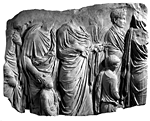
Ara Pacis Museum: Reference• Ara Pacis on Google Earth?• Pledges of Empire: The Ara Pacis and the Donations of Rome • Vintage Ara Pacis Museum postcard • The Ara Pacis of Augustus and Mussolini • Roman holiday: A trip back in time • pushpullbar.com • Augustus and the Ara Pacis • The Ara Pacis Augustae • Contexts for the Ara Pacis • Ara Pacis Museum on Google maps November 23, 2008Ara Pacis on Google Earth?I am trying to load this Ancient Rome 3D in Google Earth - http://earth.google.com/rome/ February 06, 2008Pledges of Empire: The Ara Pacis and the Donations of RomeFrom the American Journal of Archaeology, some new Ara Pacis scholarship:
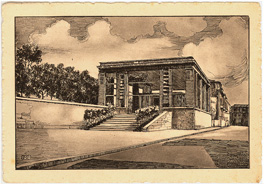
There is a little more here, and it seems the full article will be posted in PDF format at some point. October 22, 2007Vintage Ara Pacis Museum postcard
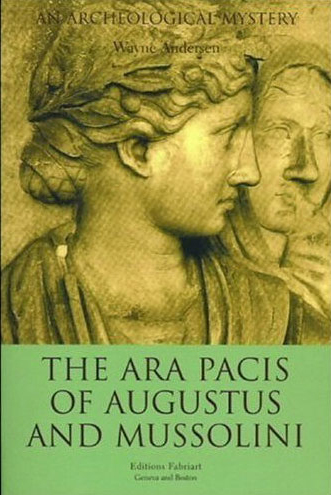
September 26, 2007The Ara Pacis of Augustus and Mussolini
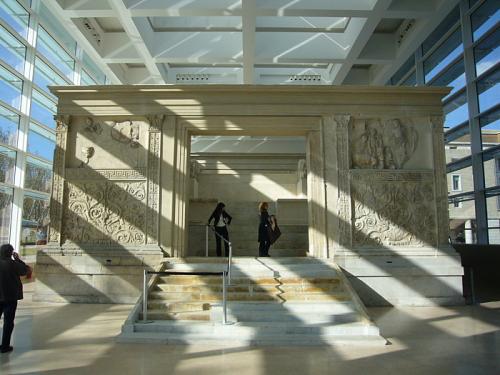
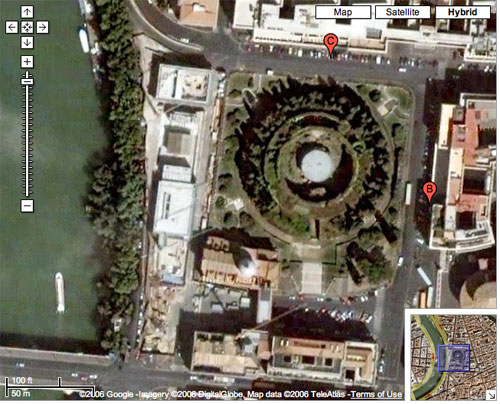
"The Ara Pacis of Augustus Is this true? I don't see any reviews on Amazon for this book - does anyone know anything about it? May 21, 2007Roman holiday: A trip back in time"To the north there is another grand obelisk which is in fact the pointer of a giant sundial. This too was designed by Augustus and, on his birthday, the shadow of the obelisk points directly at the Ara Pacis, Augustus' altar of peace, one of the finest examples of Roman sculpture ever created. The altar dates from 9BC. It is enclosed by walls of white marble on which are carved bas-reliefs of garlands and flowers. Above this are reliefs of the imperial family, the priests, senators and Roman people going in procession to give thanks for the blessings of the Roman peace." From the very amusing article "Roman holiday: A trip back in time". April 26, 2007pushpullbar.comThis looks like a good site to visit if you are into architecture: pushpullbar.com There is a very long and detailed post up about the Ara Pacis Museum, with lots of photos and information. April 01, 2007Augustus and the Ara PacisIn all, then, the succession problem was a difficult one for Augustus, and his solutions only perpetuated it for all future emperors. Despite the internal difficulties engendered by the issue, Augustus was keen to present a united image of the imperial house to the populace. This is best illustrated by the "Altar of the Augustan Peace" (Ara Pacis Augustae), dedicated in January, 9 BC, and laden with symbolic significance largely outside the purview of this biography. For our current purposes, most important is the presentation to the people, on the south frieze, of the imperial family--women and children included--as a corporate entity. The message of dynastic harmony and the promise of future stability emanating from the imperial house is palpable. The reality, as we have just seen, was rather different. From RenegadeEvolution - an interesting blog. January 24, 2007The Ara Pacis AugustaeBy the late first century B.C., Augustus and the ruling Roman elite were intensely conscious of Rome’s position as heir and administrator of the Greek legacy in all its cultural, political, and economic ramifications. But they were also committed to the belief that the Roman state could meet the imperial challenge only by renewing and revitalizing popular belief in the national mores and institutions which had been progressively eroded by the decades of military and political strife, social unrest, and cultural confrontation endemic to the Late Republic... This is the introduction to an excellent new paper/blog post by Brian Spenser about the Ara Pacis. November 27, 2006Contexts for the Ara PacisHere is a detailed scholarly lecture, "Contexts for the Ara Pacis", from 1997 by Minott Kerr, given at Reed College: The Ara Pacis consists of two parts, a sacrificial altar proper, and the surrounding precinct walls. The almost square enclosure which defines an area of about 35 by 40 roman feet stood on a base and had openings on the east and west sides. The altar complex was entered by a flight of stairs leading to the western opening. The irregular topography of the original site sloped upward toward the east so the opening in the east side of the precinct wall was at the level of the adjacent via Flaminia. Within, the altar proper stood on a stepped base at the center with a second flight of steps at the west leading to the sacrificial table. More here. Ara Pacis Museum on Google mapsHere is the current Google maps satellite view of the Ara Pacis Museum. It looks like this shot is at least a year old - it appears that the current, new museum is under construction: ![]() You can also plainly see the Mausoleum of Augustus and the two churches (San Girolamo degli Schiavoni and San Rocco) that are directly south of the mausoleum. Part of the criticism of the new museum is that the wall that runs along the Lungotevere (hidden by the trees - it is the road along the Tiber) cuts off the view of these churches from passing motorists and people on the sidewalk. Ara Pacis reference websitesHere are a couple of websites with some history of the Ara Pacis:
| Categories:Recent Articles:
Florence Blogs & Websites:Other Italy websites & blogs: |